
Walking Through Time: Why Xochicalco is Our Favorite Classroom Outside the Classroom
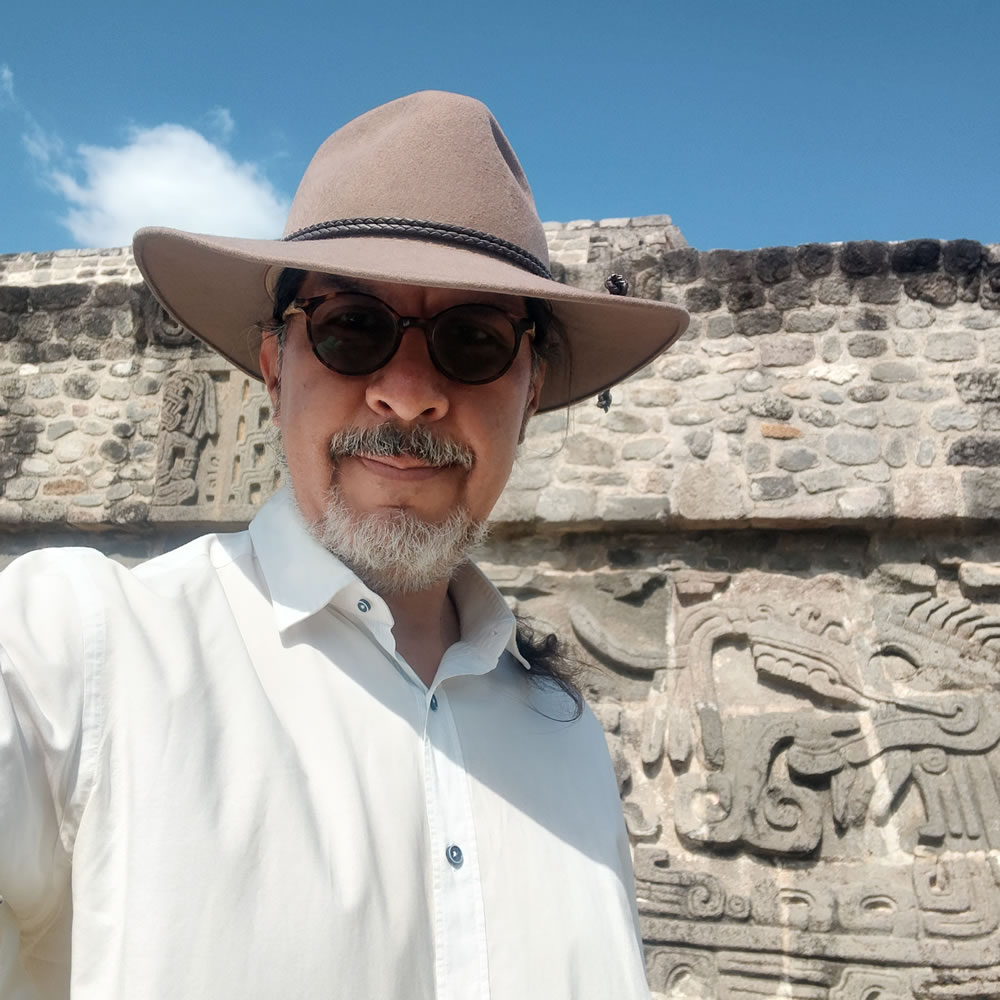
By Carlos Brito
At IDEAL Spanish Mexico, we believe that learning Spanish shouldn’t be confined to four walls, a whiteboard, and a stack of grammar books. Language lives in the streets, the markets, the food, and the deep, complex history of the people who speak it. That is why our cultural excursions are the heartbeat of our program. For me, leading our students out of Cuernavaca and into the surrounding valleys isn’t just “work”, it’s an adventure. Every trip is a chance to explore, laugh, practice Spanish in the real world, and connect with the soul of Mexico.
Over the last few months, one destination has topped our itinerary more than any other: the archaeological zone of Xochicalco.
If I had to pick an all-time favorite excursion, the pyramids of Xochicalco might just take the crown. Located a mere 45 minutes from our school in Cuernavaca, it is effortlessly accessible, yet it feels like stepping into another world. No matter the season or the time of day we go, Xochicalco is always picturesque, peaceful, and endlessly fascinating.
What is Xochicalco?
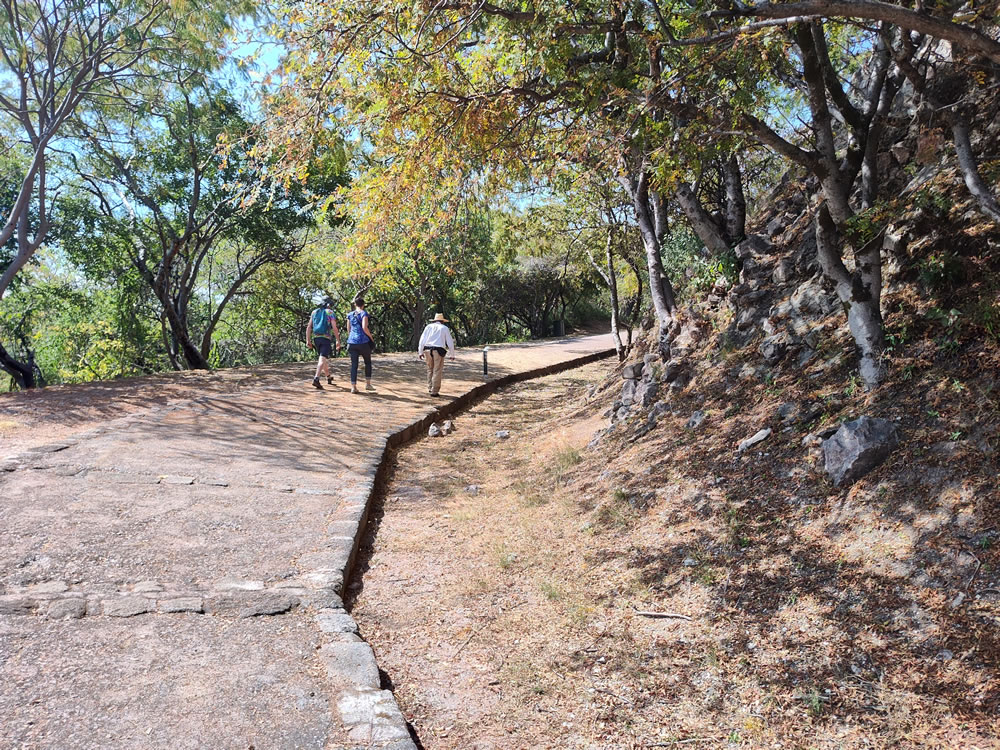
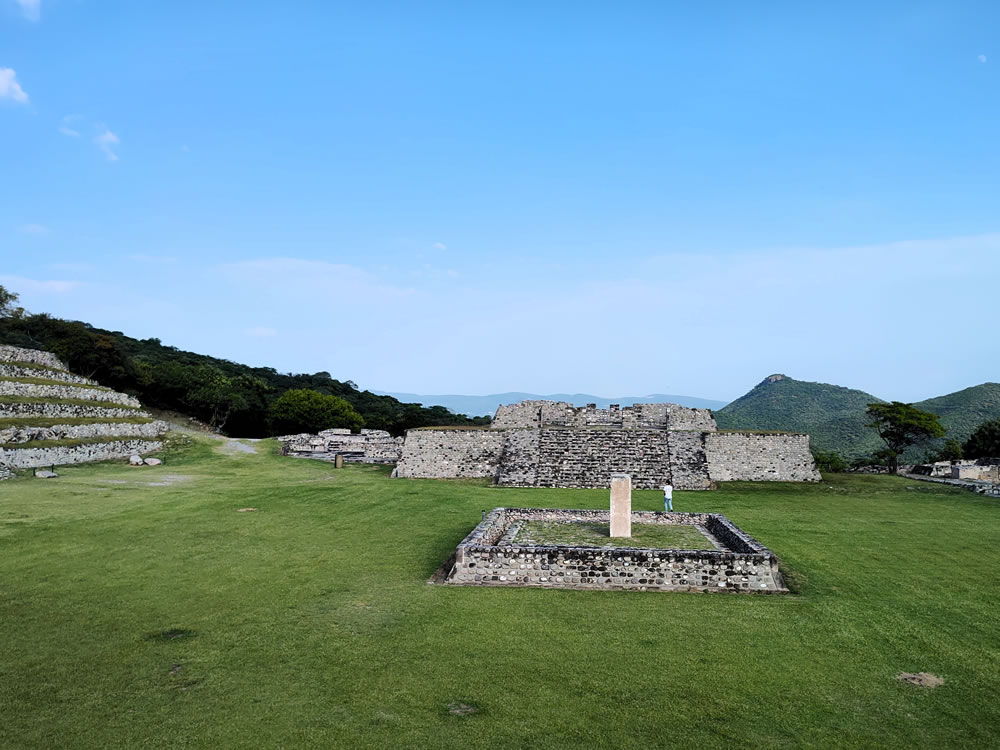
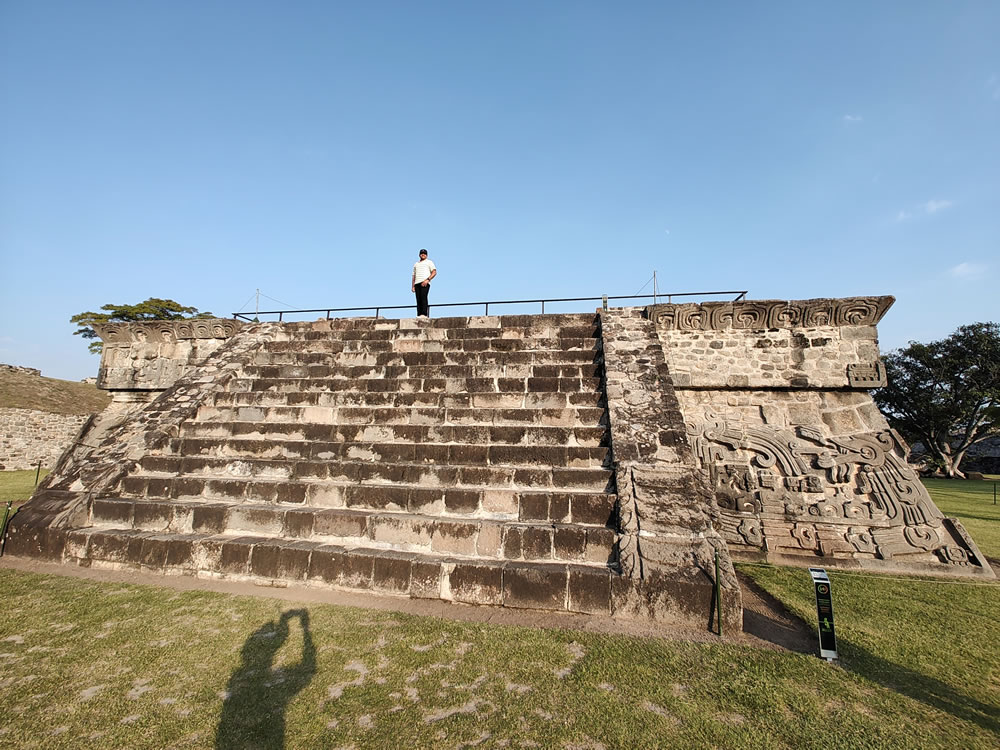
Perched atop a series of terraced hills surrounded by dramatic valleys and mountains, Xochicalco, whose name in Nahuatl means “In the House of Flowers”, was a major political, religious, and commercial powerhouse that flourished between 650 and 900 AD, right after the fall of Teotihuacán. Unlike many other Mesoamerican cities, Xochicalco was a true cultural crossroads. As you walk through its grand plazas, ballcourts, and the famous Temple of the Feathered Serpent, you can literally see the fusion of artistic styles from the Maya, Zapotec, and central Mexican cultures carved into the stone. It even boasts an incredible subterranean astronomical observatory, where a shaft of sunlight illuminates the cave floor to mark the agricultural calendar.
Seeing Beyond the Stone
Whenever I guide a group through Xochicalco, my biggest goal is to help students look past what is in front of them and imagine the city when it was alive and thriving.
Today, we call these places “ruins”, structures weathered by over a millennium of sun, rain, and human history, because we see bare gray stone, we often assume the pre-Hispanic world was austere and monochrome. Nothing could be further from the truth! I always remind my students that Xochicalco, like most ancient Mesoamerican cities, was an explosion of color. Every pyramid, plaza, and wall was covered in smooth stucco and painted in vibrant reds, ochres, blues, and greens, covered in intricate symbols, murals, and messages meant to be read by everyone who walked by. It was loud, bright, and bursting with life.
Time-Traveling Tastes, Sounds, and… Jokes?
Standing among those ancient terraces, I always let my own imagination run wild. One of my biggest fantasies is to get into a time machine and travel back 1,100 years to experience the things that history books and stone carvings simply cannot preserve.
First on my time-travel itinerary? The food. What did a daily meal in Xochicalco actually taste like? How did they season their dishes before the arrival of European ingredients? We know they had corn, beans, squash, chilies, cacao, and local herbs, along with wild game and insects, but what were their signature recipes? I would love to sit down at a Xochicalcan market and taste those original, unadulterated flavors. Would I be blown away by a culinary masterpiece, or would my modern palate be completely surprised?
Right after lunch, I’d want to hear their music. Archaeologists have found clay flutes, ocarinas, drums, and conch shells, so we have a rough idea of their instruments—but what did a live concert sound like? What were their rhythms, their melodies, their compositions? I would give anything to close my eyes and listen to the soundtrack of ancient Mexico.
And finally, there is one thing we almost never think about when we look at ancient civilizations: their sense of humor.
In Mexico, we often romanticize pre-Hispanic life as a state of permanent, solemn spirituality, as if people spent 24 hours a day meditating on the cosmos and performing serious rituals. Come on, they were normal human beings! And normal human beings love to laugh. You know that in every crowd in Xochicalco, there was “el chistoso”, that one witty friend who made jokes about everything, teased their neighbors, and kept everyone laughing while they worked or traded in the plaza. What did a Xochicalcan joke sound like? What made them burst out laughing?
The Living Footprint
When we stand at the top of Xochicalco, looking out over the valley with a gentle breeze blowing, we get to rebuild that lost world together. Even though that era is buried in the past, its footprint is everywhere in modern Mexico, in the words we speak, the food we eat, and the warmth and humor of our people.
And honestly, there is no better place to discover it than on a sunny morning with a group of curious students, practicing their Spanish and bringing history back to life.
Ready to step outside the textbook and experience Mexico’s living history? Join us at IDEAL Spanish Mexico in Cuernavaca, where every week brings a new language milestone and a new cultural adventure!

