The Mother of Mexico: Why La Virgen de Guadalupe is More Than Just a Religious Icon
Today, December 12th, is one of the most important days on the Mexican calendar: The Day of La Virgen de Guadalupe (Our Lady of Guadalupe).
If you are currently studying Spanish and Mexican Culture with us at IDEAL Spanish Mexico, you will see a tremendous outpouring of faith, devotion, and celebration. The sheer scope of this devotion is immense, so much so that we often joke, with a mix of sincerity and humor, that Mexicans are more Guadalupano than Catholic.
To understand Mexico, you must understand the profound, pervasive influence of the Guadalupana.

The Legend and Its Historical Roots
The devotion to the Virgin of Guadalupe is rooted in a compelling legend dating back to the early days of colonial Mexico:
- The Apparitions (1531): The story holds that the Virgin Mary appeared five times to an indigenous peasant named Juan Diego on Tepeyac Hill in Mexico City. This happened just ten years after the Spanish conquest of the Aztec capital, Tenochtitlán.
- The Narrative: The account of these apparitions is preserved in the Nican Mopohua, a narrative written in 1556 by the indigenous author Antonio Valeriano. Crucially, it was written in the indigenous Nahuatl language, legitimizing the faith within the native community.
- A Sacred Site: The place of the apparition, Tepeyac Hill, already had a long tradition of pilgrimage. Before the Spanish arrival, it was a site of worship dedicated to the Aztec mother goddess Tonantzin, meaning “Our Venerated Mother.” This blend of indigenous sacred tradition and Catholic imagery was crucial for the mass conversion of the indigenous population.

The Symbol That Unifies a Nation
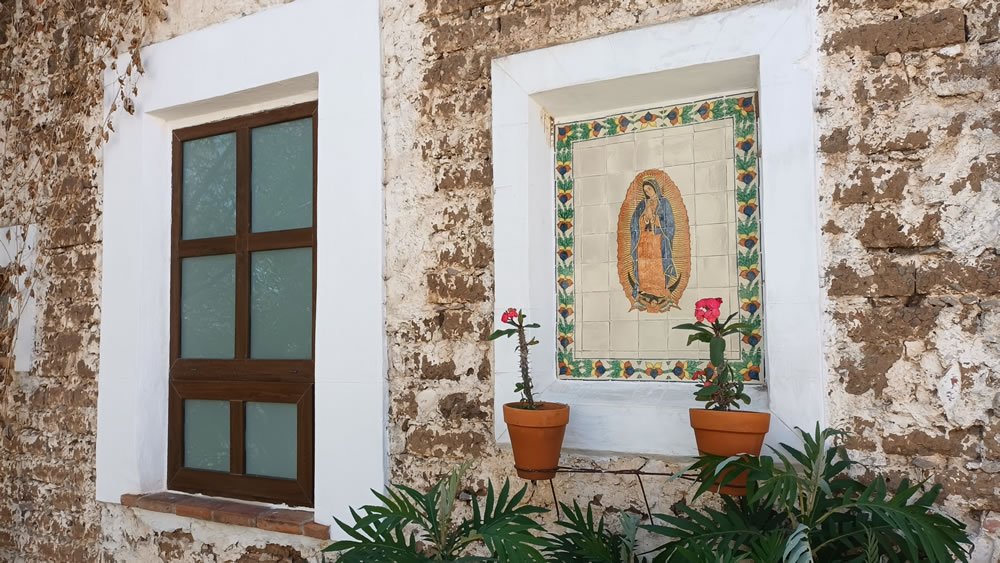
More than any other religious symbol, the image of the Virgin of Guadalupe holds a singular place in the Mexican heart. Her image, dark-skinned, standing on a crescent moon, and surrounded by rays of sun, is seen everywhere across Mexico:
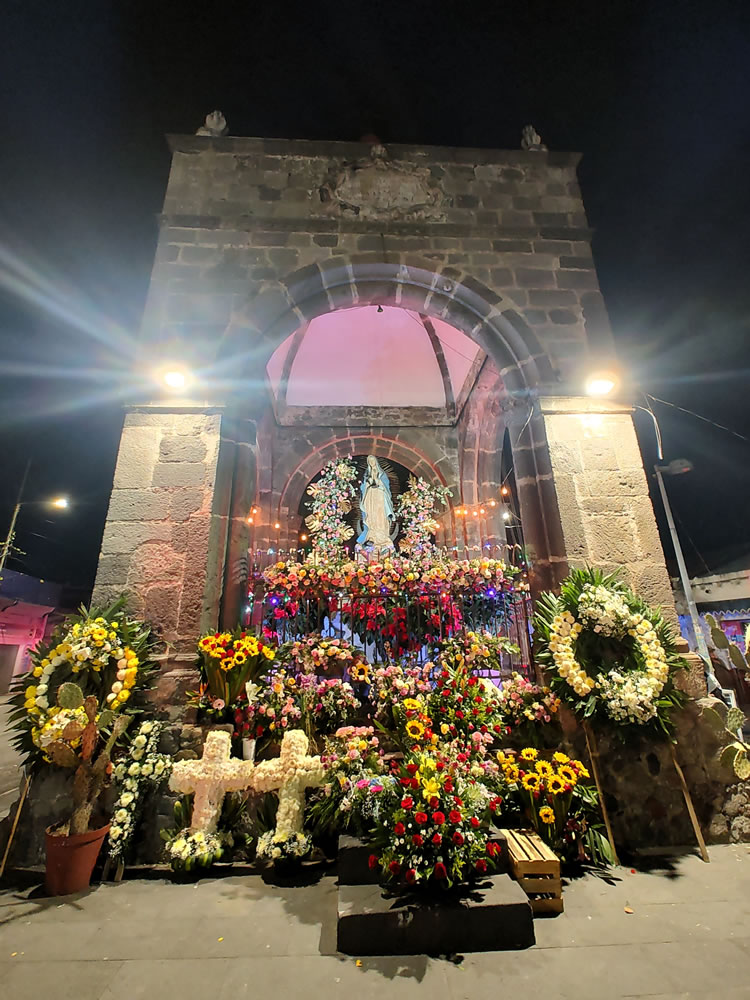
- Public Life: Every Catholic church has an altar dedicated to her, but her image also graces streets, small tienditas (shops), public transportation, private vehicles, schools, and almost every Catholic home.
- A Symbol of Identity: During the struggle for independence in 1810, the rebel priest Miguel Hidalgo used the banner of the Virgin of Guadalupe as the standard for his army. She is often credited with symbolizing a mestizo (mixed-race) identity, representing the spiritual fusion of the Spanish and indigenous worlds.
Today: The Feast of the Virgin
Today, December 12th, is a day of massive celebration.
The tradition calls for people to bring the “Mañanitas” (Mexico’s traditional birthday song) to the Virgin at the Basilica in Mexico City, and at every local sanctuary across the country.
The original Basilica and the modern structure built to accommodate the faithful on Tepeyac Hill currently receive an overwhelming number of visitors. Around these days, the sanctuary welcomes approximately six million pilgrims, with millions more visiting local churches.
A Mother’s Consolation
Beyond the ongoing historical and theological debate about the veracity of the myth, the reality is that the Virgin of Guadalupe is simply the Mother of Mexico.
She represents consolation, protection, and deep spiritual connection for millions of believers who find profound faith in her image. She is a cultural constant that transcends class, region, and ethnicity, providing a spiritual anchor for the entire nation.