
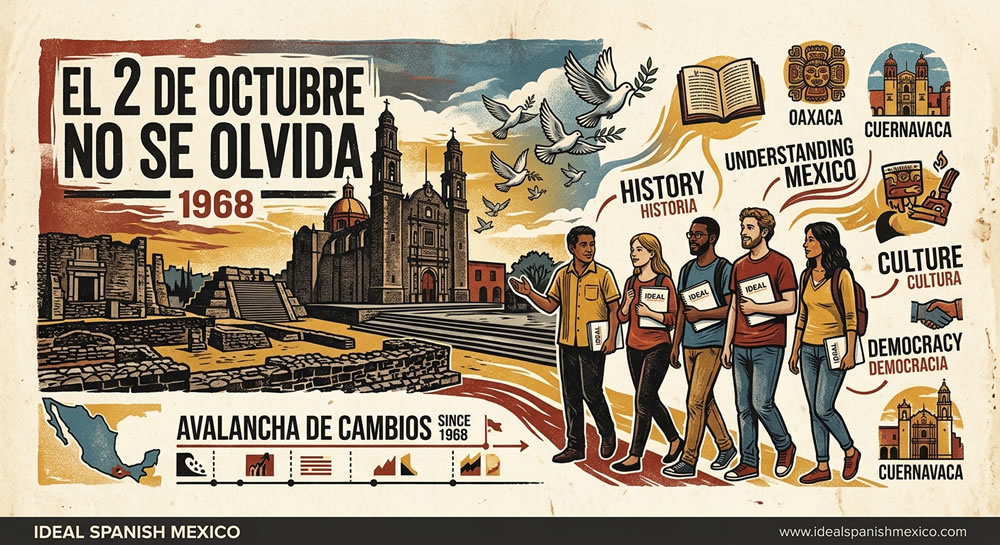
October 2nd Is Not Forgotten: Understanding Modern Mexico Through History
For anyone living in Mexico or following its sociopolitical landscape, October 2nd carries a profound weight. You will often hear the phrase “El 2 de octubre no se olvida” (October 2nd is not forgotten) echoed across news outlets, rallies, and daily conversations.
At IDEAL Spanish Mexico, learning Spanish goes far beyond mastering grammar and vocabulary. We believe that true language fluency requires cultural and historical literacy. Sometimes, that means engaging with dark and painful chapters of history that have shaped the nation into what it is today. October 2nd is precisely one of those defining moments.
What Happened on October 2, 1968, in Tlatelolco?
In the late summer and autumn of 1968, Mexico City was preparing to host the Summer Olympic Games—a event meant to showcases a modern, stable, and prosperous nation to the world. At the same time, a growing student-led movement was gaining momentum, calling for democratic reforms, freedom of speech, an end to government repression, and the release of political prisoners.
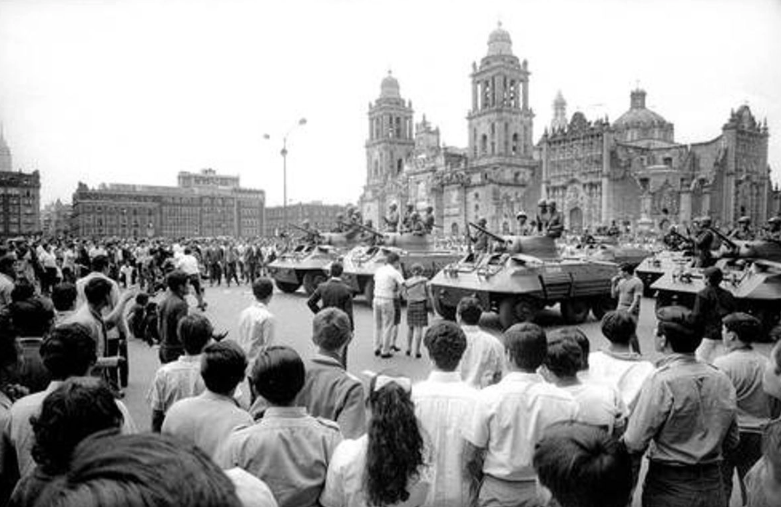
On the afternoon of October 2, 1968, thousands of students, professors, workers, and families gathered peacefully at the Plaza de las Tres Culturas in Tlatelolco, Mexico City.
What began as a peaceful rally ended in tragedy. Armed forces and paramilitary units surrounded the plaza and opened fire on the crowd. Hundreds of peaceful demonstrators were killed, injured, or illegally detained. In the immediate aftermath, state-controlled media suppressed information about the true scale of the massacre, leaving a lasting scar on the national consciousness.
Why We Remember: Guarding Against Authoritarianism
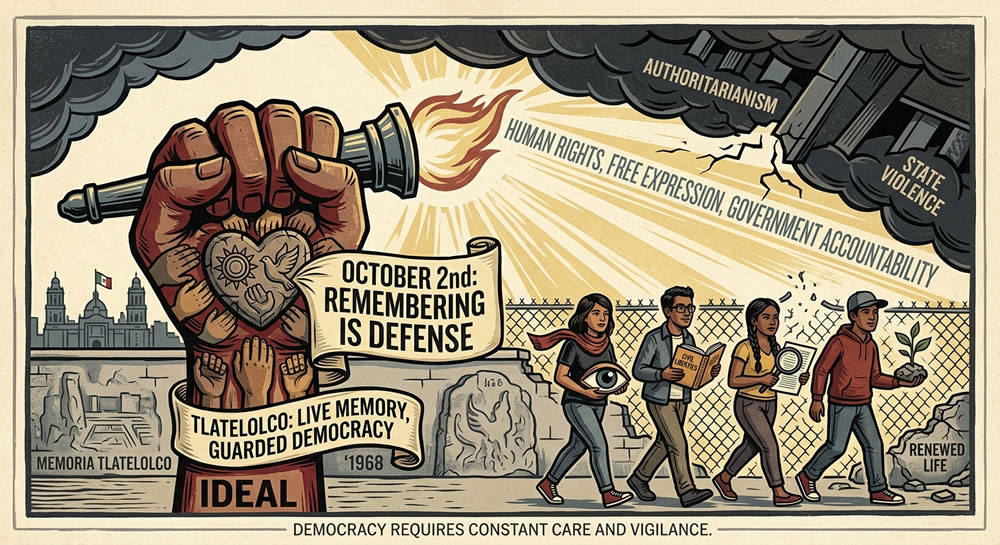
At IDEAL, we honor the memory of October 2nd because remembering is our best defense against history repeating itself—whether on a massive scale or in subtle, everyday forms.
Democracy and civil liberties require constant care and vigilance; no society is inherently immune to authoritarianism or state-sponsored violence. By keeping the memory of Tlatelolco alive, generations of Mexicans continue to defend human rights, free expression, and government accountability.
Why This Matters for Spanish Language Learners
Understanding Tlatelolco is essential for anyone who wants to understand modern Mexico.
The events of 1968 triggered a historic ripple effect—an avalanche of social, cultural, and political changes that unfolded over the following decades. From the rise of independent journalism and opposition political movements to major democratic reforms, the socio-political climate of 21st-century Mexico was directly forged in the crucible of Tlatelolco.
When you study at IDEAL, our classes and cultural discussions dive into these crucial context points. Learning about Mexico’s history helps you connect deeper with native speakers, read local literature and news with real context, and appreciate the vibrant, resilient spirit of the Mexican people.

