

More Than a Performance: A Night with the Concheros in Cuernavaca
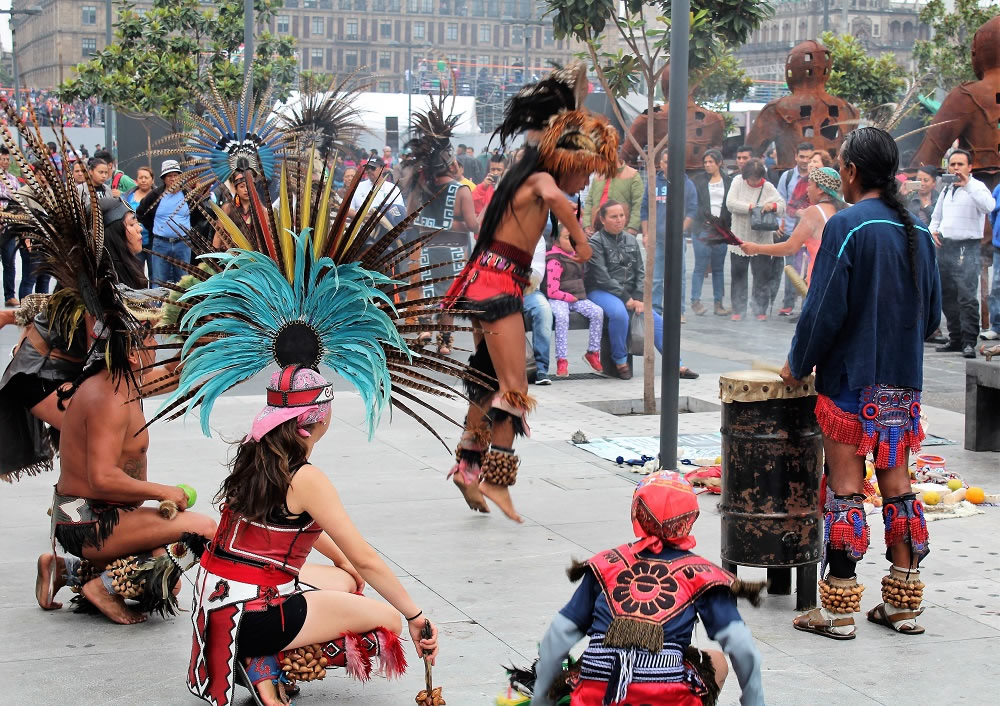
Last Tuesday, March 10th, a simple evening stroll through the historic center of Cuernavaca turned into a profound cultural encounter. As the sun dipped below the horizon and the city lights began to glow, the rhythmic, thunderous beat of the huehuetl (traditional drum) began to echo through the cobblestone streets.
Following the sound and the fragrant scent of burning copal (an ancestral resin incense), we found them: Los Concheros.
Who are the Concheros?
While many visitors often refer to them as “Aztec Dancers” (Danzantes Aztecas), their true identity is much more complex. The term Conchero actually refers to a specific group of dancers that use a type of stringed instrument—a lute-like guitar made from an armadillo shell (concha).
These groups represent a living bridge between Mexico’s pre-Hispanic past and its colonial history. Emerging in the 16th century, the dance started as a way for indigenous people to preserve their spiritual rituals under the guise of Catholic traditions. Today, it is a powerful display of cultural resistance and identity.

A Tradition Literally Ancestral
It is easy to see the feathers, the vibrant colors, and the intricate beadwork and think of it as a tourist attraction. However, for those participating, this is a sacred ritual.
- The Attire (Maxtlatl): Every feather and symbol on their “traje” has a meaning, often representing elements of nature or cosmic forces.
- The Movement: The steps are not random; they are prayers in motion. The dancers move in circles, honoring the four cardinal points and the connection between the earth and the sky.
- The Ayoyotes: You’ll hear a distinct rattling sound as they move. These are dried seed pods worn around the ankles, meant to mimic the sound of rain.
Why You’ll Encounter Them
When you come to Mexico to study with us at Ideal Spanish Mexico, you will be immersed in a world where history is still breathing.
Whether you see them in a main plaza in Cuernavaca or near the Zócalo in Mexico City, encountering Los Concheros is a reminder that in Mexico, the past isn’t just in books—it’s dancing in the street.

Cultural Tip: If you see a circle of Concheros, it is polite to watch from a respectful distance. Often, they will offer a “limpia” (spiritual cleansing) using copal smoke for those who ask.

