
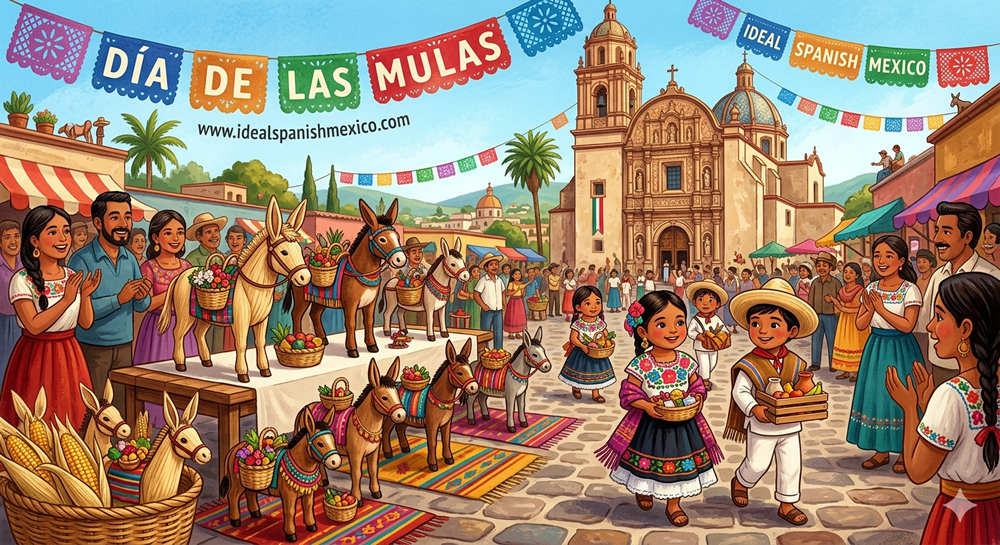
Mules, Corn Husks, and Tradición: Understanding Mexico’s unique “Día de las Mulas”
If you have been exploring Mexico or learning the language, you already know that Mexican culture is a beautiful, complex tapestry woven from centuries of history. Almost every calendar date carries a story.
One of the most fascinating examples of this cultural blending happens sixty days after Easter. While the Catholic world celebrates Corpus Christi, Mexico puts its own unique twist on the holiday, affectionately calling it El Día de las Mulas (The Day of the Mules).
If you’ve ever wondered why beautifully crafted toy mules and children in traditional indigenous clothing suddenly fill the streets outside Mexican churches on this day, here is the story behind this multi-layered tradition.
The Universal Roots: What is Corpus Christi?
To understand El Día de las Mulas, we first have to look at its European, Catholic roots. Established in the Middle Ages, Corpus Christi (Latin for “Body of Christ”) is a major feast day in the Catholic Church. It honors the institution of the Holy Eucharist (Holy Communion).
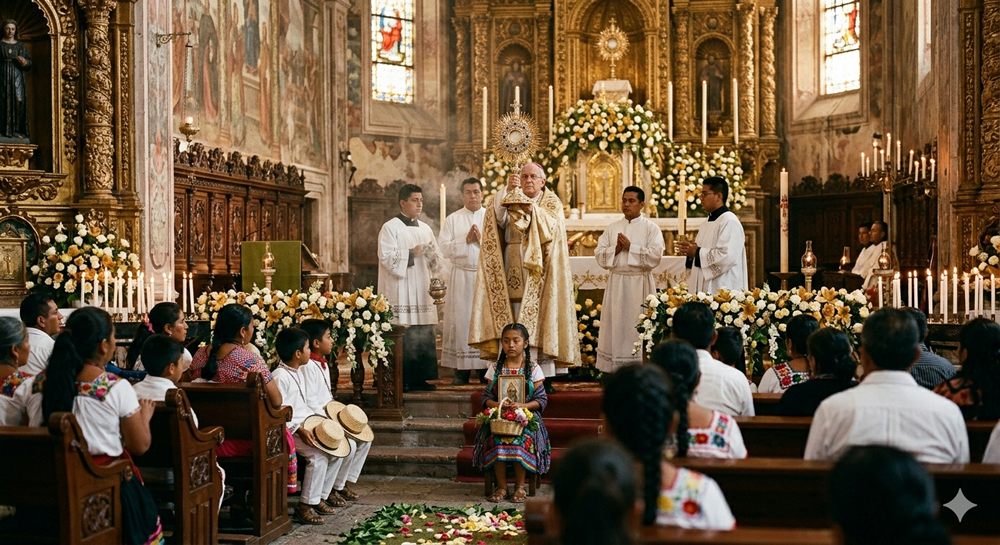
When the Spanish colonized and Christianized Mexico in the 16th century, they brought this solemn celebration with them. In colonial times, it was a day of massive processions, where the viceroy, high-ranking priests, and the nobility marched through the streets of Mexico City to display their faith.
Why “The Day of the Mules”?
So, how did a solemn religious feast become associated with stubborn pack animals? The answer lies in the practical realities of colonial life and a famous historical legend.
- The Practical Reason: The Countryside Comes to Town
During the colonial era, people from distant indigenous villages had to travel for days to reach the grand cathedrals in the major cities for the Corpus Christi mass. They didn’t have cars or trains; instead, they loaded their mulas (mules) with their best harvest, handmade crafts, and food for the journey.
On the day of the feast, the plazas outside the churches were packed with hundreds of mules. It essentially turned into a massive, vibrant marketplace where the countryside met the city.
- The Legend of the Kneeling Mule
There is also a popular religious legend that cements the mule’s role in this holiday. Story has it that a man named Ignacio was debating whether to become a priest but had deep doubts about his faith. On Corpus Christi day, as the holy procession passed by, Ignacio thought to himself, “If God is truly present in that bread, even the animals would kneel.”
According to the legend, his pack mule immediately dropped to its knees in reverence. Ignacio took this as a sign, renewed his faith, and the humble mule became an everlasting symbol of the day.
Did you know? Because of this holiday, there is a playful Mexican joke where people tease friends named Manuel (or Manolo) by calling them “mulas” on this day. It’s all in good fun!
Handcrafted Mules: A Living Craft
If you walk outside any major church in Mexico on Corpus Christi, you will see the streets lined with artisans selling miniature mules.
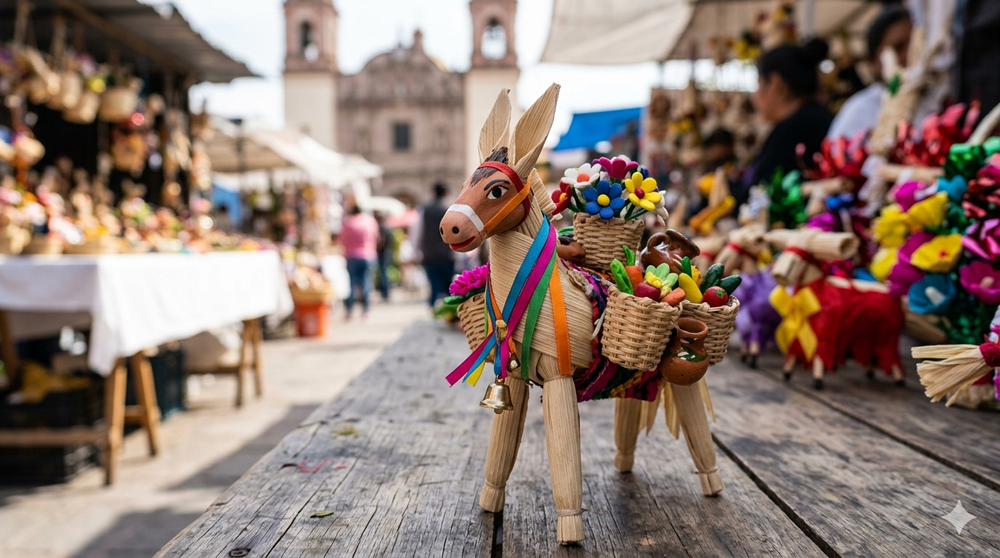
These beautiful crafts are traditionally made from hoas de maíz (dried corn husks), sticks, and colorful ribbons. They are often depicted carrying tiny baskets filled with miniature fruits, vegetables, or flowers—a direct nod to the offerings the indigenous people brought to the cities centuries ago. Buying one is a way to bring good luck and abundance into your home.
Why are Children Dressed as “Inditos”?
Another striking sight on this day is seeing young boys and girls dressed in traditional indigenous clothing, often referred to locally as “Inditos”.
- Boys typically wear white cotton shirts and pants (calzón de manta), a straw hat, and a small poncho.
- Girls wear beautifully embroidered blouses and skirts.
- Both often carry tiny baskets or crates (huacales) filled with miniature fruits or pottery.
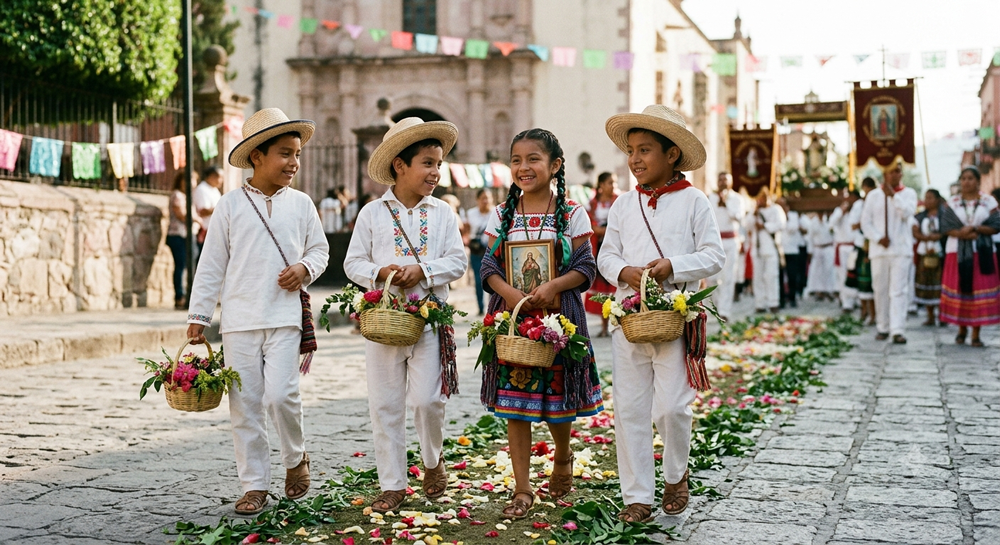
This sweet tradition is a way to pay homage to the ancestors who traveled long distances across Mexico to bring their first harvests as offerings to the church. For Mexican families today, dressing up the children is a proud celebration of their roots, a way to keep history alive, and, of course, a perfect opportunity for a family photo.
Have you ever seen the mulitas de hoja de maíz in Mexico? Let us know in the comments below!

